
Dark Patterns: Woh kya hota hai?
In this edition: Dark Patterns, Google Classrooms and IKEA | Mixology 80
Hej, and welcome to another edition of Mixology. Recently, the government took a major step to curbing Dark Patterns.
Major online platforms now say that they are ‘dark pattern’ free. Is it really so… we take a look
🌏 Product & Design News:
Dark Patters are Gone, Apparently
Over the last few weeks, 26 major platforms from e-commerce to quick commerce told the CCPA they’re now dark-pattern free.
It sounds like progress.
But the filings reveal something else:
Compliance today is based on self-declaration, not verification.
Self-Certified Clean, But… How?
There was:
no standard audit checklist
no required format
no minimum evidence
no third-party validation
So every company defined its own process and passed its own audit.
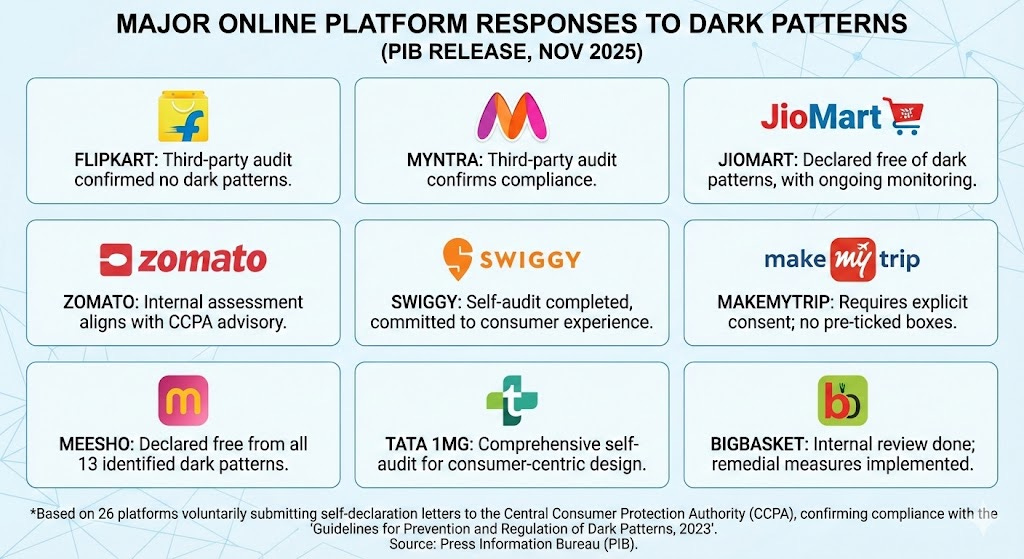
This verbiage alone tells the story, many statements are short, vague or purely declarative rather than demonstrative.
Quick check: What are dark patterns? These are deceptive patterns in UI and UX, intentionally placed to mislead, trick or deceive users.
The term was coined by Harry Brignull on 28 July 2010. He registered the site darkpatterns.org (now rename Deceptive Patterns)
Reality Check: Users Still See Dark Patterns
A LocalCircles study found ~97% of platforms still deploy at least one dark pattern - hidden charges, timers, forced add-ons, drip pricing and more.
So while filings say “clean,” user experience says “not quite.”
The Bigger Issue: A Regulatory Loophole
Only 18 of the 26 declarations are public, and none include methodology or proof.
Without mandatory transparency or independent testing, regulation risks becoming symbolic, not protective.
The Bottom Line
A “dark-pattern free” badge shouldn’t be a marketing line, it should be measurable, reviewable, and verifiable.
Right now, it’s mostly a promise.
And until the system demands proof over paperwork, compliance will continue to look better on PDFs than it does in practice.
🗞 Related 👉
CCPA Publishes Dark Pattern Self-Audits Of 18 E-Commerce And Quick Commerce Platforms
Dark Patterns and weak remedies: Why the CCPA Advisory falls short
👉🏻PS: Have an interesting read to recommend to 9500+ readers? You can also recommend your own article/video/case study. Tell us here.
📅 Events @ UXHack:
Weekend Hackathon #94 Results
👉🏻 Product: Google Classroom
Context: Improve this screen to make it easier for students to locate their to-do lists, action items, and important information from their respective classrooms.

💼 Featured Jobs:
Design Jobs 🎨
Associate Director – UX Design at Incedo Inc. | Gurugram
Product Designer at Global Matrix Solution | Meerut
Product Jobs 🅿️
Product Experience Specialist at GlobalLogic | Noida
Director - Product Management at Spyne | Gurugram
We also recently launched a Social Job feed. Check it out here
⛏️ UXH Demodays
In this episode of Demodays, we take a look at how we leverage GenAI to handle large volumes of Figma comments and then organise them. Tools used: Cursor, Llama, Groq and ofcourse Figma
🖥️ From Founders’ Desk:
Akshay Discovers a new Co-working Space: IKEA
I know: IKEA is NOT a coworking space. But when I went to the one in Navi Mumbai I saw something totally different. The place was mostly empty, being mid-week, but a section of the ‘restaurant’ was buzzing.
With food lovers? Nope. With people working on their laptops. And then I figured this may be the best Co-working space one can have.

Coffee, unlimited, comes in at Rs 90. Ambience is great, no one disturbs you. Washrooms are super clean, as expected. It’s very safe and there is lots and lots and lots of space.
So, for all likes and purposes, this was like a co-working space/coffee shop. Also, given its proximity to the local station, getting there is not a hassle either.
Just wish IKEA had free Wifi, but that’s ok
PS: the shots were taking at night, once everyone left, just before closing
And that is it for this the 80th Edition of Mixology!
Hejda, as they would say. Until next time….